
alloClae

Lake Norman Plastic Surgery

Introduction

Introduction to alloClae

Not everyone who would benefit from soft-tissue volume restoration wants – or has enough donor fat for – liposuction. alloClae offers another approach to soft-tissue contour enhancement using processed donor-derived adipose tissue, without requiring fat harvesting from your own body.

At Lake Norman Plastic Surgery, we offer both surgical and nonsurgical approaches to volume restoration and body contouring. For patients considering alloClae in Charlotte, Huntersville, and the Lake Norman area, our goal is not simply to recommend a product. We evaluate your anatomy, the amount and location of volume needed, your available donor fat, and your aesthetic goals to determine whether alloClae, traditional fat grafting, another injectable treatment, or a surgical procedure is the best fit.

We proudly serve patients from Huntersville and throughout Lake Norman, including Cornelius, Davidson, Mooresville, Denver, and the greater Charlotte area.

A young woman with long dark hair is standing by a window, looking to the side while wearing a light pink lace bralette and light gray bottoms. - Body Contouring after Massive Weightloss in Huntersville, NC White Textured Background Overlay

What Is alloClae?

alloClae is a ready-to-use, donor-derived adipose tissue product designed for soft-tissue volume restoration in areas where fat naturally exists. Unlike traditional fat grafting, alloClae does not require liposuction to harvest fat from your own body.

The donor adipose tissue is carefully screened and processed to remove cellular components while preserving components of the adipose extracellular matrix and its three-dimensional structure. Once placed in an appropriate soft-tissue plane, the material provides immediate structural volume and is designed to serve as a scaffold within the recipient tissue.

Because there is no donor-site procedure, alloClae may be particularly useful for lean patients with limited available donor fat, patients who need a relatively modest amount of volume correction, or those who prefer to avoid liposuction.
What Are the Benefits of alloClae?

For appropriately selected patients, potential advantages of alloClae include:

  • No liposuction or fat-harvesting procedure is required.
  • Immediate structural volume is present at the time of treatment.
  • Treatment can be used for selected areas of soft-tissue volume deficiency or contour irregularity.
  • There is no separate liposuction donor site to recover from.
  • Lean individuals who have limited donor fat may still be candidates.
  • Treatment can be individualized according to the location and degree of volume correction needed.

alloClae is not necessarily a replacement for traditional fat grafting. Each option has different advantages, limitations, costs, and potential risks. Choosing between them depends on your anatomy and treatment goals.

Who Are the Best Candidates for alloClae?

You may be a candidate for alloClae if you:

  • Want soft-tissue volume restoration without undergoing liposuction.
  • Have naturally low body fat or limited donor fat for traditional fat transfer.
  • Have a localized contour irregularity or area of volume deficiency where additional soft-tissue volume may be beneficial.
  • Want a minimally invasive approach to selected contour concerns.
  • Are in good overall health and have realistic expectations about the degree of improvement treatment can provide.

The best treatment plan begins with a comprehensive evaluation. In some cases, fat grafting, another injectable treatment, or surgery may provide a more predictable or appropriate result. We will discuss those alternatives with you rather than assuming alloClae is the right treatment for every patient.

alloClae vs. Fat Grafting:
How Do I Choose?

Both alloClae and traditional fat grafting can be used to restore soft-tissue volume, but they are very different treatments.

Traditional fat grafting uses your own fat. Fat is collected with liposuction from an area such as the abdomen or thighs, processed, and transferred to the area requiring additional volume. Autologous fat grafting can be an excellent option when adequate donor fat is available, particularly when larger volumes or treatment of multiple areas are planned.

alloClae does not require a donor site or liposuction. This may make it particularly useful for lean patients, patients seeking relatively limited volume correction, or those who want to avoid a separate fat-harvesting procedure.

Neither option is automatically better. During your consultation, Dr. Wilson will consider the amount and location of volume needed, your available donor fat, whether liposuction would otherwise benefit your contour, and your goals for treatment. In some situations, traditional fat grafting may make more sense; in others, alloClae may offer a simpler approach.

How to Begin Your alloClae Journey

Your treatment begins with a personalized consultation at Lake Norman Plastic Surgery. We will review your medical history, discuss the areas you would like to improve, and examine your anatomy to determine whether alloClae is appropriate for your goals. If alloClae is recommended, we will develop an individualized treatment plan, including the areas to be treated and the anticipated amount of product required. We will also discuss realistic expectations, alternatives, potential risks, recovery, and cost before you decide whether to proceed. Before treatment, you may be advised to modify certain medications or supplements that can increase bruising when medically appropriate. You will receive specific pre- and post-treatment instructions based on your planned procedure.

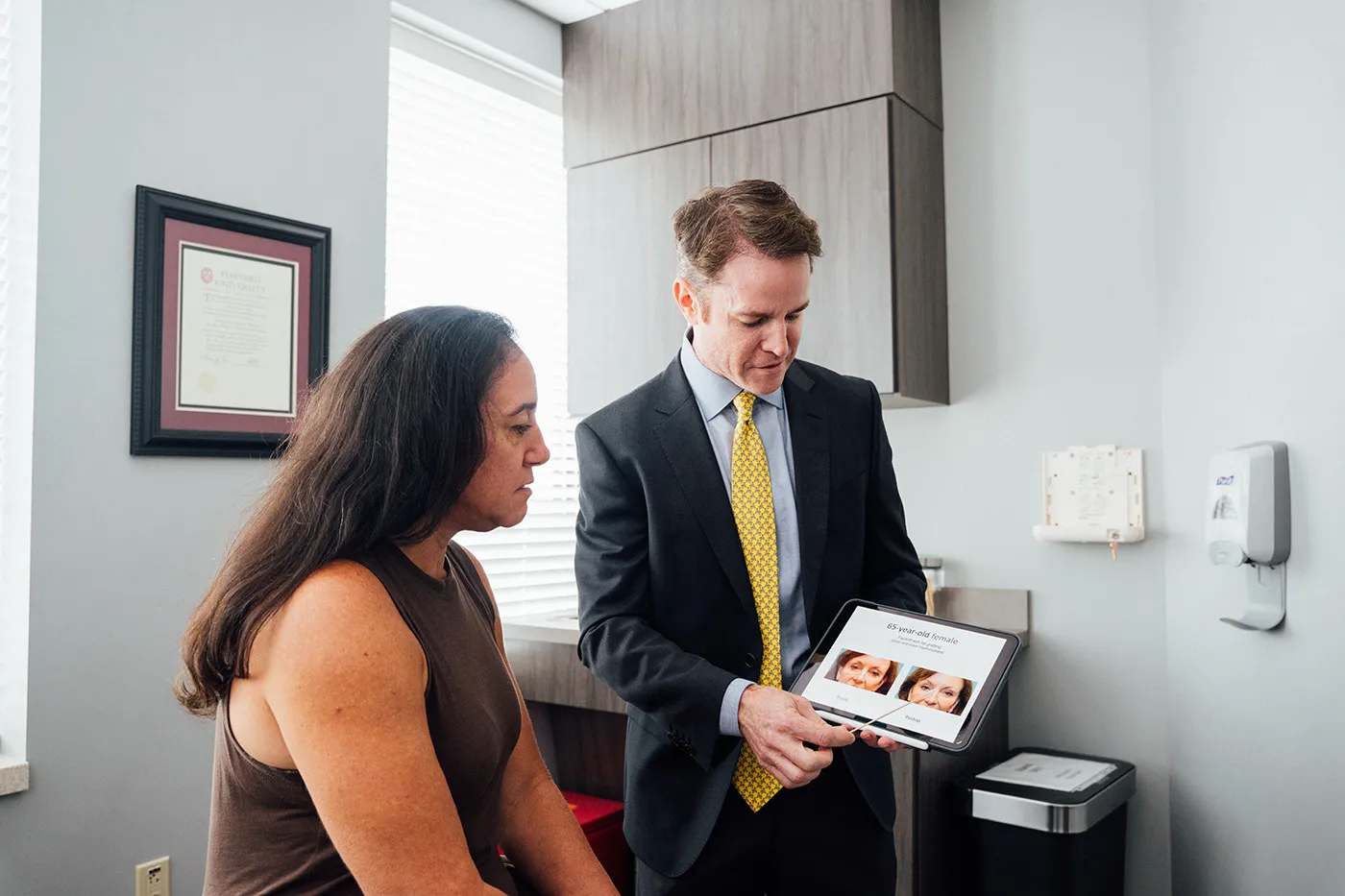
A physician, Dr. Henry Wilson, wearing a dark suit and yellow tie, shows a tablet to a seated female patient with long dark hair in an examination room. The tablet screen displays before-and-after photos of a woman's face. The patient is looking intently at the tablet. A framed certificate hangs on the wall behind the patient.

What to Expect on the Day of alloClae Treatment

When you arrive for your alloClae treatment, we will confirm your treatment plan and may take clinical photographs. The treatment area will be prepared, and local anesthesia may be used depending on the location and extent of treatment.

The alloClae material is then carefully placed into the planned soft-tissue areas using an injection technique selected for your anatomy and treatment goals. Because the material is ready to use, there is no separate liposuction or fat-processing portion of the procedure.

Treatment time varies with the number of areas and the volume being placed. After treatment, swelling, bruising, tenderness, or temporary firmness may occur. You will receive detailed aftercare instructions before leaving the office.

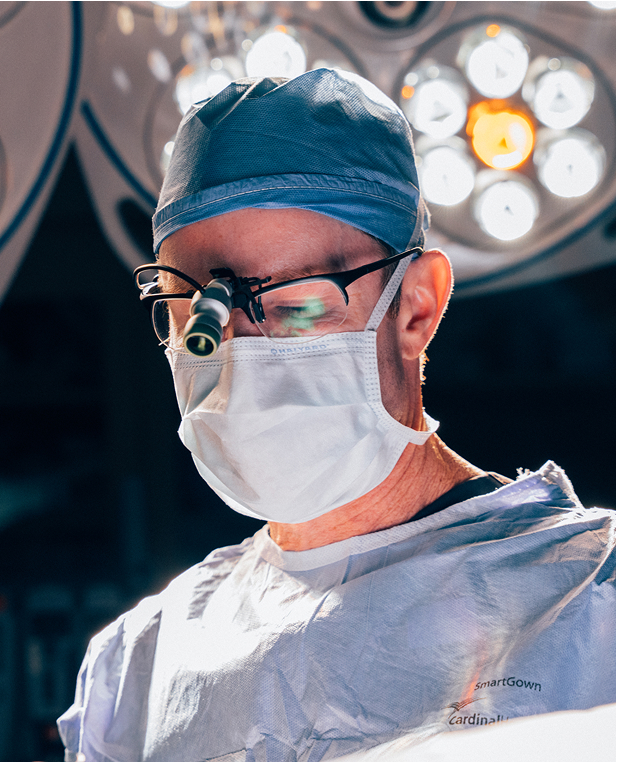
Close up shot of Dr. Henry Wilson outdoors, wearing protective scrubs, mask and hair cap. He wears glasses and a magnifying glass emphasizing his precision.
White Textured Background Overlay

Can alloClae Be Combined With Other Treatments?

Yes. In selected patients, alloClae may be incorporated into a broader surgical or nonsurgical treatment plan. The appropriate combination depends on the area being treated and the type of correction needed.

For example, traditional fat grafting may be preferable when larger-volume correction is required or when a patient would also benefit from liposuction. Dermal fillers may be better suited to smaller areas requiring highly precise correction. Other body-contouring procedures may be recommended when skin excess, tissue laxity, or a structural contour issue cannot be adequately addressed by adding volume alone.

Because Lake Norman Plastic Surgery offers both surgical and nonsurgical options, your consultation can focus on choosing the treatment that best addresses the underlying problem rather than fitting every concern to a single product.

alloClae Recovery

Recovery is generally more limited than traditional fat grafting because there is no liposuction donor site. Swelling, bruising, tenderness, and temporary firmness around the treated area are expected to vary according to the treatment location and amount of product placed.

Many patients return to routine, nonstrenuous activities relatively quickly, although individual recovery varies. You should avoid unnecessary pressure or manipulation of the treated area during the early healing period and follow the specific post-treatment instructions provided by our office.

As initial swelling resolves, the treated contour becomes easier to evaluate. Follow-up will be recommended as appropriate to assess your result.

How Long Do alloClae Results Last?

alloClae is a relatively new option for aesthetic soft-tissue augmentation, and long-term clinical experience is more limited than it is for established treatments such as autologous fat grafting. The amount of correction that persists may vary depending on the treatment area, volume used, individual tissue characteristics, and other factors.

During your consultation, we will discuss what is currently known about alloClae and set realistic expectations for both the initial correction and longer-term result. We prefer to be transparent about the limits of available long-term data rather than promise a specific duration that cannot be predicted for every patient.

How Much Does alloClae Cost in Charlotte, NC?

The cost of alloClae treatment in Huntersville and the greater Charlotte area varies because each treatment plan is individualized. The treatment area, amount of product required, and whether alloClae is combined with another procedure all affect the total cost.

During your consultation at Lake Norman Plastic Surgery, we will provide a detailed treatment recommendation and transparent pricing based on your goals and anatomy.

To schedule your consultation, call (704) 885-0550 or request an appointment online.

Why Choose Lake Norman Plastic Surgery for alloClae?

Lake Norman Plastic Surgery is led by Dr. Henry Wilson, a board-certified plastic surgeon certified by the American Board of Plastic Surgery and the American Board of Surgery. Because Dr. Wilson performs both surgical and nonsurgical volume-restoration procedures, your consultation is not limited to determining how much alloClae to inject. He can also help you decide whether alloClae, traditional fat grafting, another injectable treatment, or a surgical procedure is most appropriate for the result you want.

Dr. Wilson is a Fellow of the American College of Surgeons and is active in national, regional, and state plastic surgery professional organizations, including the North Carolina Society of Plastic Surgeons (NCSPS). Our approach emphasizes individualized treatment planning, natural-looking results, patient education, and careful attention to safety.

Whether you are exploring alloClae in Charlotte or considering another aesthetic procedure, our goal is to help you understand your options and make an informed decision.

alloClae FAQ’S

Schedule Your Consultation

If you are interested in restoring soft-tissue volume without liposuction, schedule a consultation at Lake Norman Plastic Surgery. We serve Huntersville, Lake Norman, and the greater Charlotte area with individualized surgical and nonsurgical treatment options designed around your anatomy and goals.
Call (704) 885-0550 or request your consultation online.