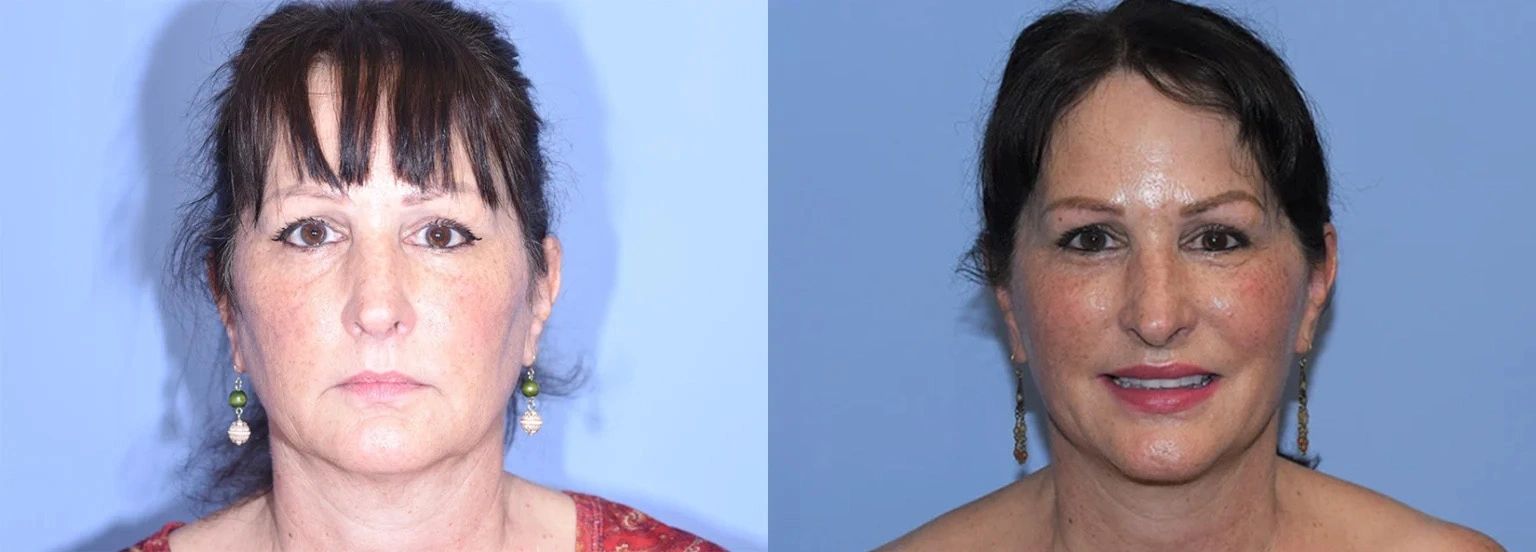
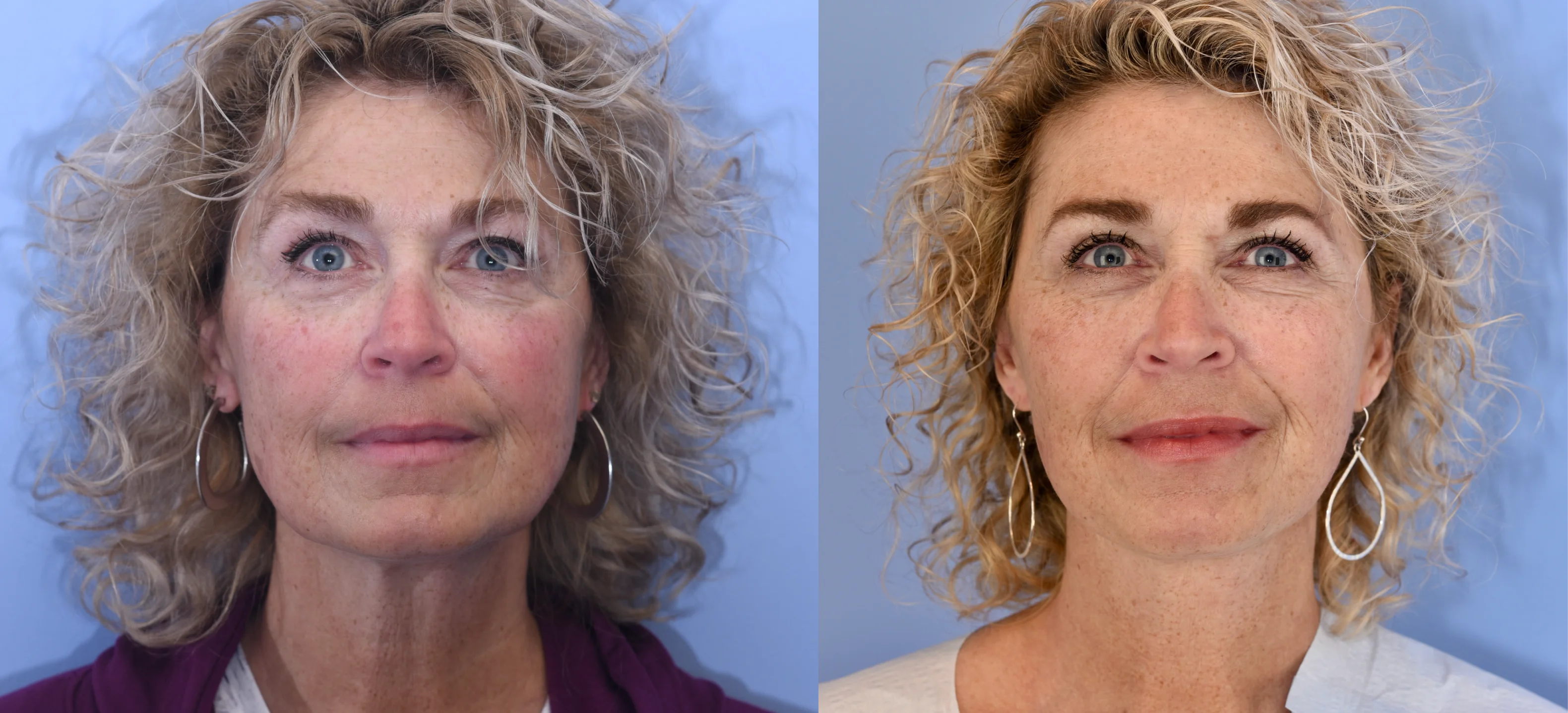
A mini facelift offers subtle rejuvenation for patients showing early signs of aging, such as mild jowls or loss of jawline definition. It uses shorter incisions and offers a quicker recovery, making it an ideal option for those seeking meaningful yet natural improvement without a full surgical procedure.
For patients not yet ready for surgery, non-surgical options such as dermal fillers and neuromodulators can temporarily restore facial volume and reduce fine lines. These treatments provide a modest refresh but cannot achieve the same degree of lifting or longevity as surgery.
A deep plane facelift addresses facial aging by repositioning the deeper layers of the face rather than relying primarily on skin tightening. By working beneath the skin and repositioning the deeper supporting tissues, this approach can improve sagging through the cheeks and lower face, soften deeper folds, and create stronger definition along the jawline. Dr. Wilson incorporates these deeper-plane principles into his facelift surgery, tailoring the extent of tissue release and repositioning to each patient’s individual anatomy and goals.
Extended deep plane facelift techniques build upon the principles of deep plane surgery with more extensive release and mobilization of the deeper facial tissues. These techniques may be particularly useful in patients with more significant cheek descent, jowling, deeper facial folds, or loss of lower facial definition. Dr. Wilson draws upon deep-plane concepts and deeper tissue repositioning as appropriate, tailoring the extent of the operation to each patient’s anatomy rather than applying a single standardized technique to every face.