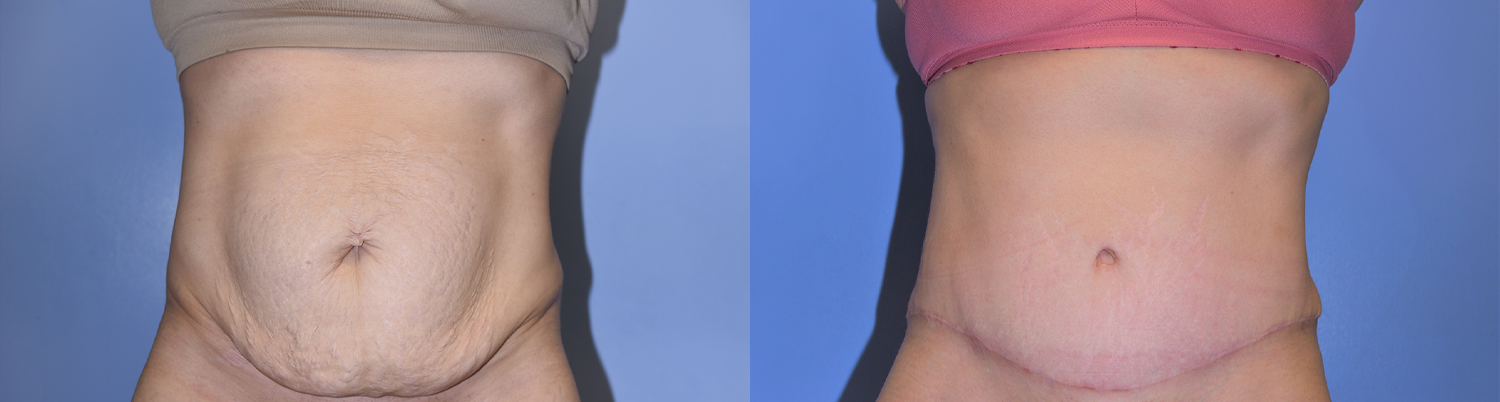
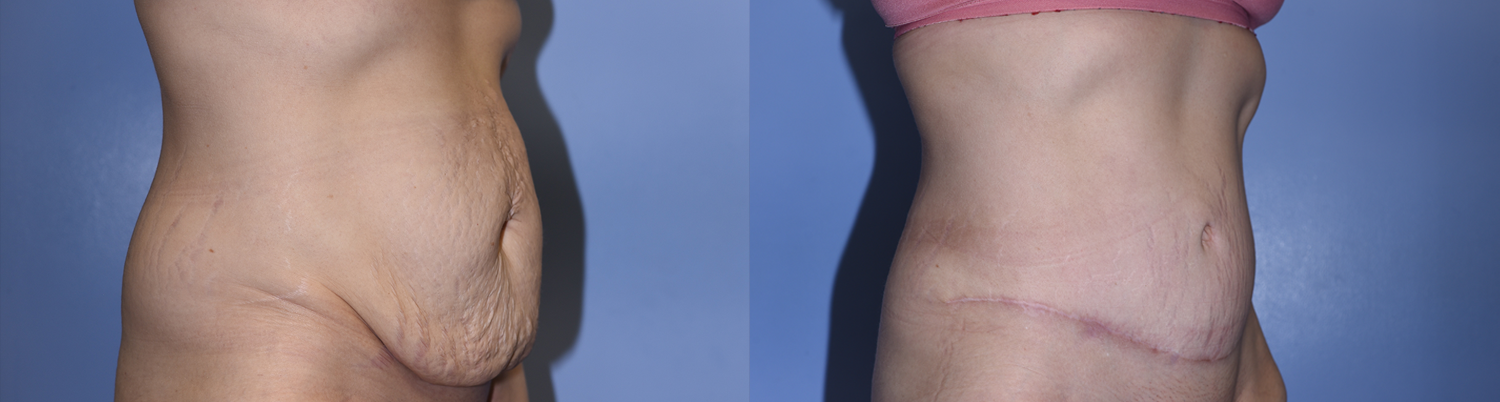
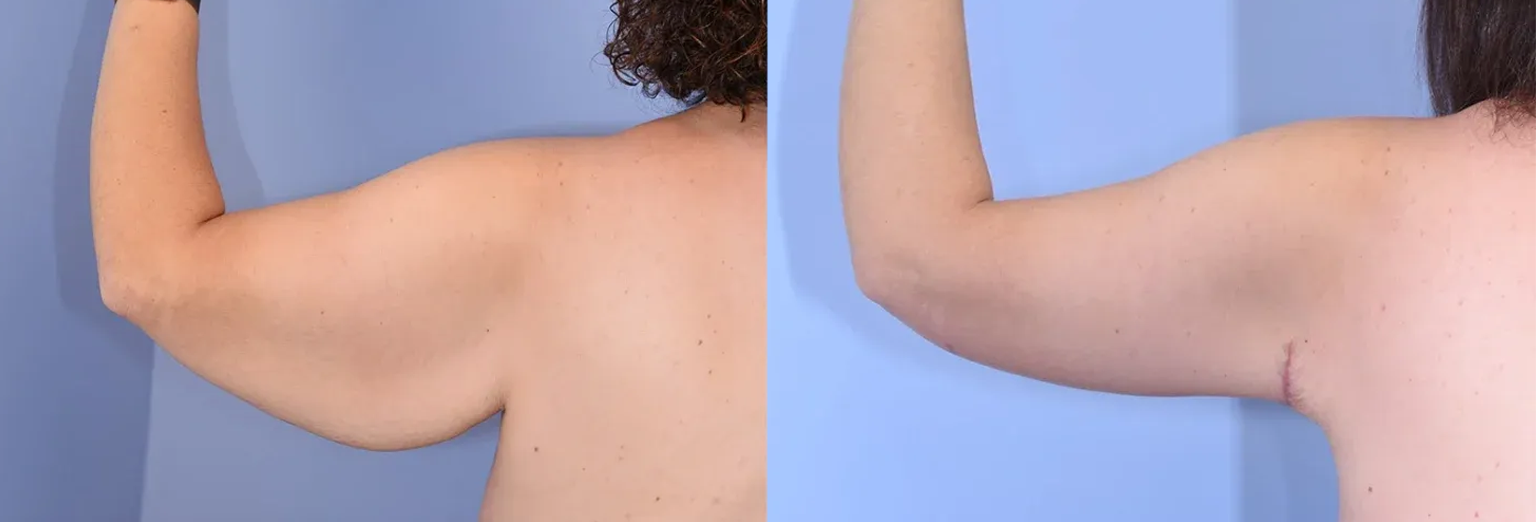
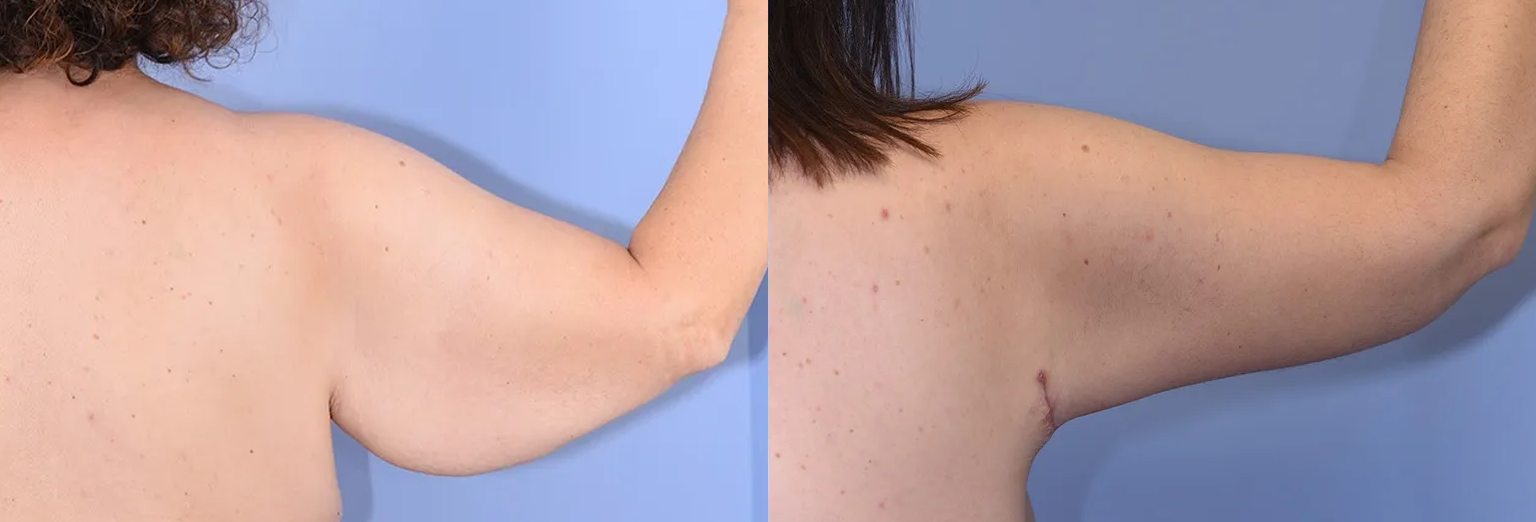
Before + After Gallery
For decades, lower blepharoplasty was almost purely a subtraction procedure: remove the herniated fat pads and a little excess skin, and the eyes look less puffy. That approach still has its place, but surgeons now recognize that many patients don’t just have too much — they also have hollowing at the tear trough and lid-cheek junction that no amount of skin tightening can fix. Removing fat from a hollow eye only ages it further.
Fat grafting closes that gap. By harvesting a small amount of a patient’s own fat (usually from the abdomen or thighs) and reinjecting it in fine layers around the eye, we can soften the transition between lid and cheek and restore a natural, rested contour — using tissue the body already recognizes as its own. The question most patients ask isn’t whether fat grafting belongs in their treatment plan anymore; it’s whether it should happen in the same operation as their blepharoplasty, or as a separate, staged procedure.
In a combined procedure, fat grafting and blepharoplasty happen in the same operative session. For the right patient, this is the more efficient path: one anesthesia exposure, one recovery period, and one round of the swelling and bruising that come with any eyelid procedure.
Combining also lets us address volume and excess tissue at the same time, which matters because the two are related — how much skin and fat we remove affects how much volume the area will need back. Combined surgery tends to suit patients with a fairly clear picture up front: obvious hollowing alongside typical fat pad herniation or skin laxity, with anatomy that doesn’t require us to see how the eyelid settles before deciding on graft volume.
The trade-off is precision. Because the eyelid is still swollen from the blepharoplasty itself, it’s harder to judge exactly how much fat the area truly needs, which calls for a conservative, experienced hand to avoid overcorrection.
Staging separates the two procedures, usually with blepharoplasty first and fat grafting several months later, once swelling has resolved and the eyelid position has fully settled. That waiting period is the whole point: it lets us see the true result of the skin and fat pad work before deciding how much volume, if any, is still needed.
This approach tends to suit patients with more complex or asymmetric anatomy, previous eyelid surgery, or thinner, more fragile lower-lid skin where overcorrection is a real risk. It’s also the more conservative option when a patient is unsure how much volume they want restored — staging means we’re never guessing under someone else’s swelling.
The cost is time: two procedures mean two recoveries, spaced months apart, and for patients juggling a calendar around events or travel, that timeline needs to be planned for accordingly.
There’s no universal answer — the right approach depends on your anatomy, your skin quality, how much volume loss you have, and how much certainty you want before committing to a fat volume.
| Consideration | Combined | Staged |
|---|---|---|
| Number of surgeries / recoveries | One | Two, months apart |
| Anesthesia exposure | Single session | Two separate sessions |
| Precision of fat volume | Good, but judged through post-bleph swelling | Higher — volume is set once the eyelid has fully settled |
| Best suited for | Clear, straightforward volume loss alongside typical fat/skin excess | Complex or asymmetric anatomy, thin lower-lid skin, revision cases, or uncertainty about how much volume is needed |
| Total timeline | Weeks | Several months |
At your consultation, we’ll examine your eyelid position, skin elasticity, and the pattern of volume loss around your eyes to recommend the approach that gives you the safest, most natural result — not necessarily the fastest one. If you’ve been considering blepharoplasty and want to understand how fat grafting fits into your own anatomy, we’d welcome the chance to talk it through with you.