Sequencing Abdominoplasty, Body Lift, Thigh Lift, and Arm Lift
Losing a significant amount of weight — whether through bariatric surgery or sustained lifestyle change — is one of the hardest things a person can accomplish. But it often leaves behind a problem that diet and exercise alone can’t fix: loose, hanging skin across the abdomen, arms, thighs, chest, and back that no longer matches the body underneath it.
Body contouring surgery is how we address that gap. The challenge isn’t usually deciding whether to operate — it’s deciding what to do first, what to combine, and what to save for later. Here’s how we think through that sequencing with patients.
Start With the Patient’s Priorities, Not a Fixed Checklist
Every massive-weight-loss patient carries excess skin differently, and every patient has a different area that bothers them most. For some it’s the abdominal apron. For others — often more than people expect — it’s the chest. Breast volume loss and severe sagging (breast ptosis) after major weight loss can be just as disruptive to clothing fit, exercise, and self-image as abdominal skin, and many patients tell us it’s actually their first priority, not their last. A breast lift, reduction, or lift-with-augmentation is a completely reasonable place to begin a contouring plan, not an afterthought tacked on at the end.
So the first real step in sequencing isn’t anatomic — it’s a conversation about which change would improve the patient’s daily life the most.
The Core Procedures
Abdominoplasty (Tummy Tuck) and Extended/Fleur-de-Lis Variants
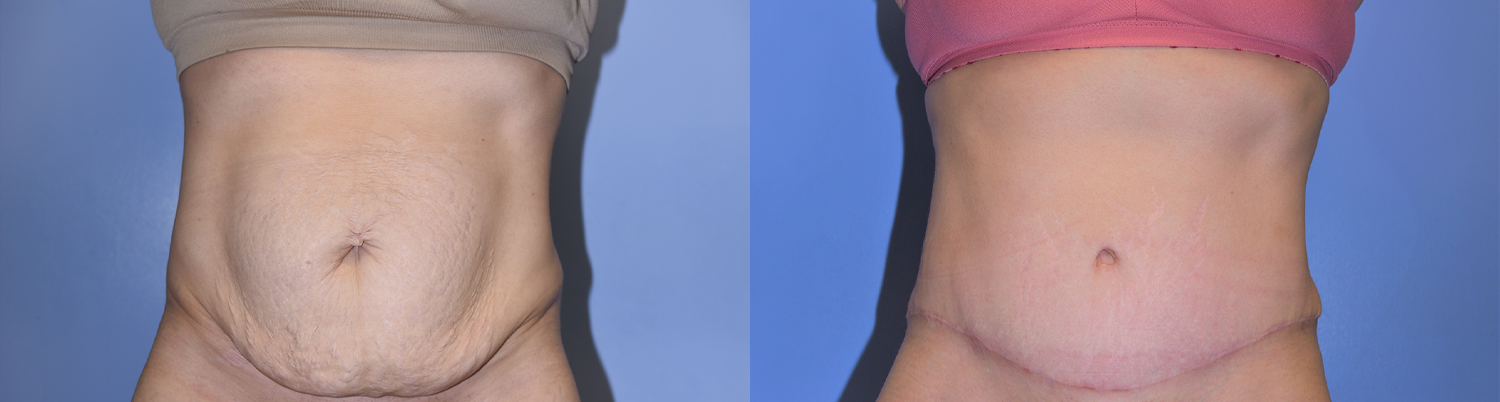
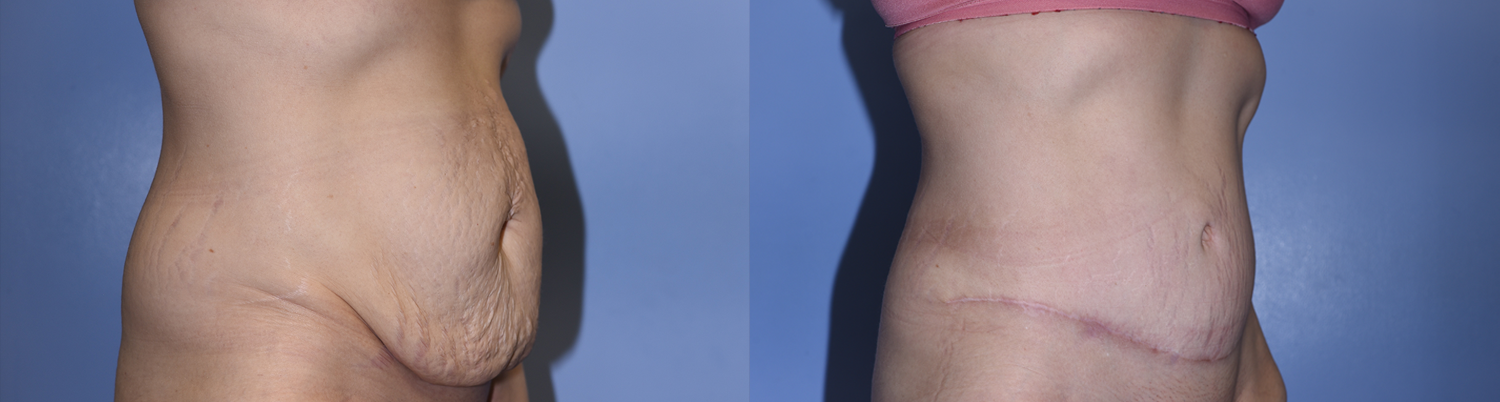
For most massive-weight-loss patients, standard abdominoplasty often isn’t enough — there’s excess skin wrapping around the flanks and back, not just the front. Extended abdominoplasty and fleur-de-lis abdominoplasty add vertical and/or lateral excision patterns to address that circumferential laxity, along with muscle plication to restore core tightness that panniculectomy alone doesn’t provide. This is usually the anchor procedure for the midsection.
Lower Body Lift
When laxity extends around the hips, buttocks, and outer thighs, a circumferential lower body lift builds on the abdominoplasty concept with a 360-degree excision. It’s a bigger operation, but for patients with substantial total-body skin excess, doing the torso in one coordinated stage — rather than as separate front-and-back procedures months apart — often gives a better final contour and a single recovery period instead of two.
Thigh Lift
Medial (inner) thigh lift addresses skin that continues to hang below the body lift’s reach, particularly after very large amounts of weight loss. It can be combined with a lower body lift in some patients or staged separately depending on skin quality, incision length, and overall surgical time.
Arm Lift (Brachioplasty)
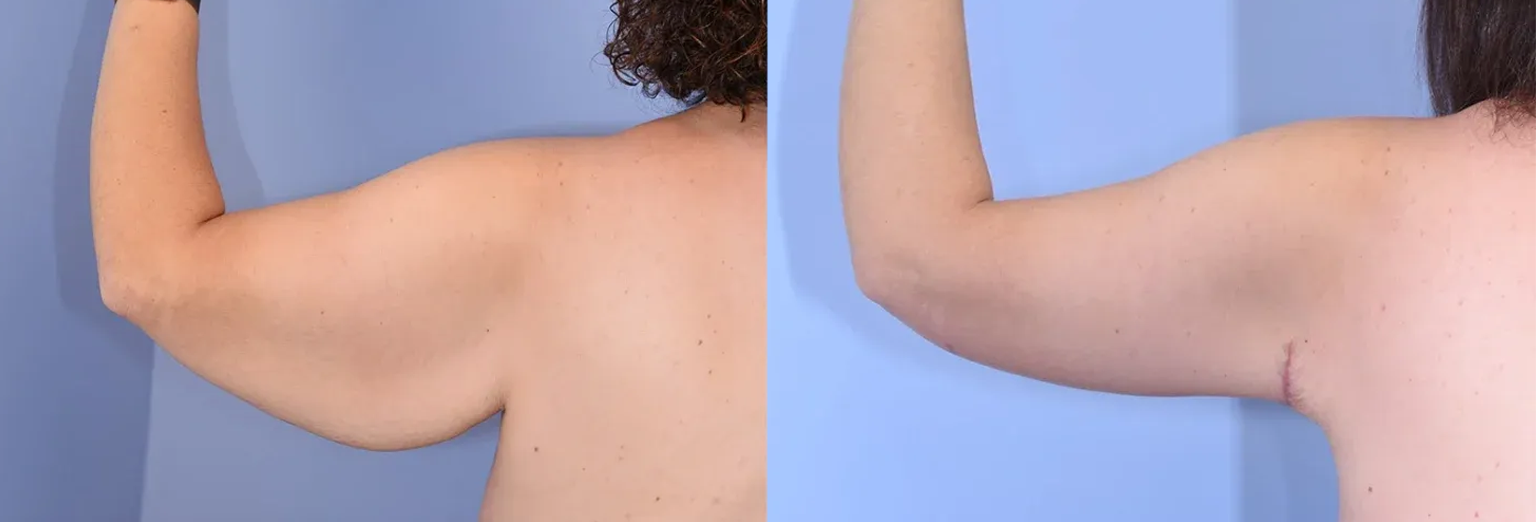
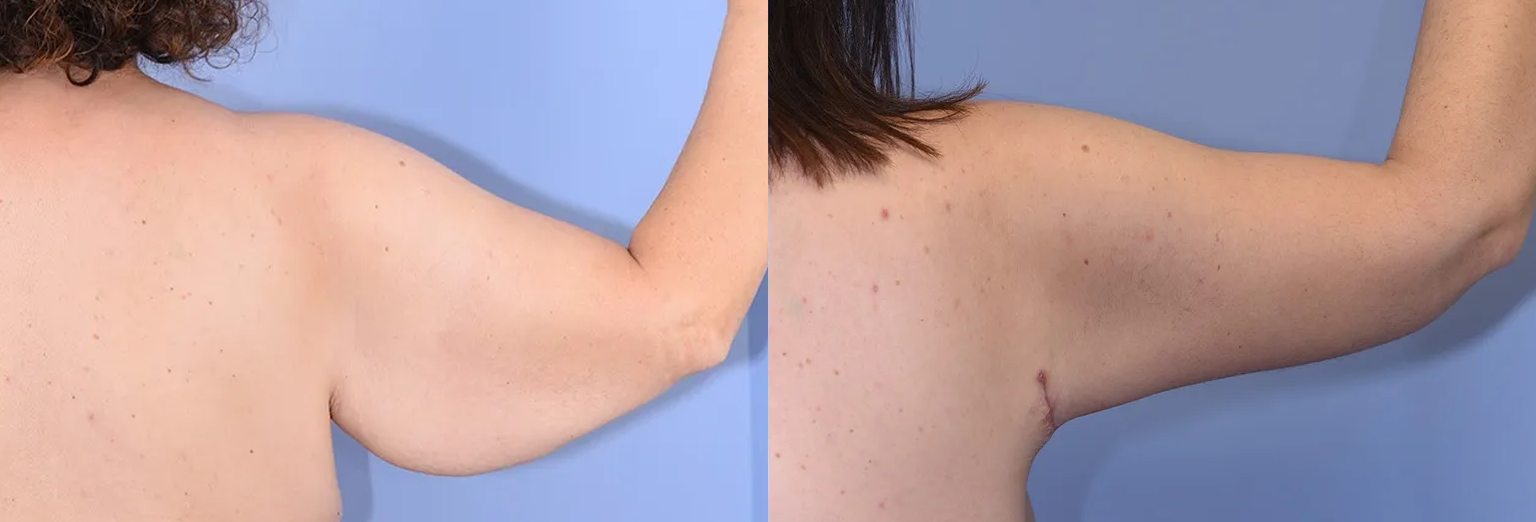
Upper arm skin laxity is extremely common and highly visible in everyday clothing — sleeveless tops, swimwear, exercise gear. Brachioplasty is often one of the most satisfying procedures for patients because the change is dramatic and the recovery, while not trivial, is generally shorter than torso-based surgery.
Breast Procedures
As noted above, breast lift, reduction, or augmentation-lift combinations deserve equal billing here, not a footnote. Many patients specifically ask to address the chest before the abdomen, and there’s no clinical reason not to lead with it if that’s their priority.
Panniculectomy
Panniculectomy — excision of the hanging abdominal panniculus without muscle repair or aesthetic shaping — is a distinct, more limited procedure, typically pursued when there’s a functional medical issue (chronic rashes, skin breakdown, hygiene difficulty, or mobility limitation) rather than a purely cosmetic one. It’s worth knowing about and it has a real role for the right patient, but for most people seeking a shaped, contoured result, abdominoplasty or a body lift accomplishes more.
How We Actually Sequence Cases
A few practical factors drive the order of operations more than anything else:
- Weight stability. We generally want 12+ months of stable weight before major contouring, since ongoing weight change alters skin excess and can compromise results.
- Total surgical time and safety limits. Combining too much in one operation increases anesthesia time and complication risk, so large-volume patients are often staged across two or three procedures rather than one marathon surgery. We generally want total operative time less than 6 hours.
- Recovery overlap. Procedures that share a recovery position or restriction (for example, torso and thigh work both limiting hip flexion) are sometimes combined; others are deliberately separated so the patient isn’t compounding two long recoveries at once.
- Patient priority. As above — if the breast or arms bother a patient more than the abdomen, there’s no rule that says the abdomen must go first.
The Bottom Line
There’s no single “correct” order for body contouring after massive weight loss. The right sequence balances what bothers the patient most, what’s safe to combine, and what will hold up well long-term. If you’re considering contouring surgery, the most useful first step is a consultation where we map your specific areas of concern against a realistic, staged plan — rather than assuming panniculectomy is the default starting point.
This post is for general educational purposes and isn’t a substitute for an individualized surgical consultation.